
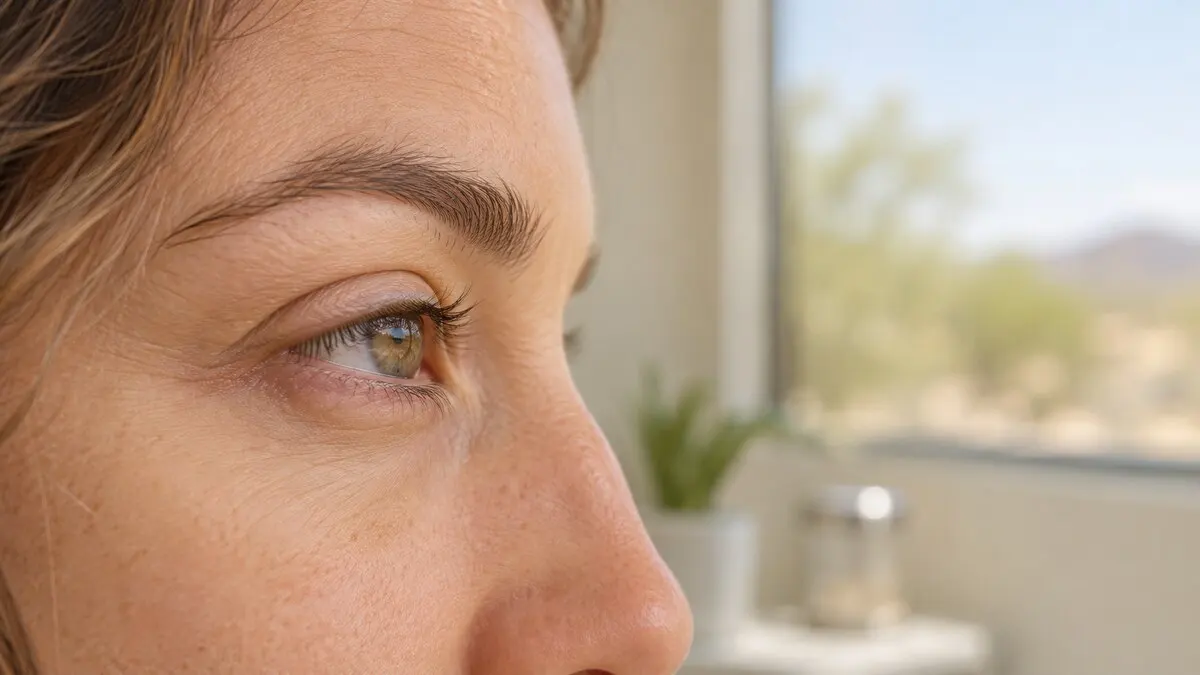
Tucson’s dry air can be wonderful when you are escaping humidity, but it is not always kind to your eyes. A day that includes bright sun, wind, air conditioning, contact lenses, and several hours at a screen can leave your eyes burning or gritty by afternoon. For some people, that discomfort arrives with pressure around the eyes, a temple headache, light sensitivity, or a migraine.
The important question is not simply, “Is the desert giving me a headache?” Dry-eye discomfort, visual strain, migraine, sinus or allergy symptoms, and an eye problem can overlap. They can also require very different care.
In my clinic, I want to know which symptom starts first, what changes it, and whether vision is affected. Dry air may be part of the story, but it should not become a catch-all explanation for every headache behind the eyes.
Key takeaways
- Low humidity, wind, fans, heating, and air conditioning can speed tear evaporation and make the tear film less stable.
- Dry eye and migraine often occur together, but an association does not prove that one directly causes the other.
- Burning, grittiness, fluctuating blur, and temporary relief after blinking fit an ocular-surface problem more than a typical tension headache.
- Light or sound sensitivity, nausea, throbbing pain, and disability that continues after the eye feels lubricated raise more concern for migraine.
- Sudden vision loss, severe eye pain, a very red eye, new double vision, halos with nausea or vomiting, or new neurologic symptoms need prompt medical evaluation.
- Acupuncture can be a great part of care for headache and migraine patterns, but it does not replace an eye examination when eye symptoms are prominent.
What Tucson’s dry air does to the tear film
Your tears are not simply water. The ocular surface depends on a stable tear film containing water, oils from the meibomian glands, and mucins that help tears spread across the eye. Each blink redistributes that film.
When the surrounding air is dry, more moisture evaporates between blinks. Wind, ceiling fans, vehicle vents, heating, and air conditioning can increase that evaporative load. If the oil layer is already weak, or if the eyelids do not close completely during a blink, the tear film can break up even faster.
Controlled studies have found that lower relative humidity increases tear evaporation and can reduce tear-film stability. That does not mean everyone living in Tucson develops dry-eye disease. It means the environment can expose a system that is already near its limit.
Common reasons that system becomes easier to overwhelm include:
- Meibomian-gland dysfunction or eyelid inflammation
- Contact-lens wear
- Incomplete blinking during visually demanding work
- Certain medications, including some antihistamines and other drying medicines
- Hormonal changes, autoimmune disease, prior eye surgery, or other medical conditions
- Long periods of direct airflow from a fan or car vent
Why dry eyes and headaches can show up together
A dry, irritated cornea sends sensory information through branches of the trigeminal nerve. Migraine also involves trigeminal pathways and altered sensory processing. That shared wiring helps explain why dry-eye symptoms and migraine commonly travel together, especially when light sensitivity is part of the picture.
However, “shared wiring” is not the same as saying dry eye always causes the headache. Sometimes ocular irritation is the main driver. Sometimes migraine makes the eyes feel dry, painful, or light-sensitive. Sometimes screen concentration, squinting, neck tension, and poor sleep add another layer.
Research consistently finds an association between migraine and dry-eye disease, but the relationship is complex and probably runs in both directions. Clinically, that means treating only the eye drops or only the headache may miss part of the pattern.
How to tell which pattern deserves attention
| Pattern | Clues that fit | What to do next |
|---|---|---|
| Dry-eye dominant | Burning, grittiness, watering, fluctuating blur, symptoms improve briefly after blinking or lubrication | Reduce airflow and screen load; arrange an eye exam if symptoms recur or persist |
| Migraine dominant | Light or sound sensitivity, nausea, throbbing or one-sided pain, familiar recurrent attacks | Use the established migraine plan and discuss prevention if attacks are frequent or disabling |
| Visual-strain dominant | Builds during close work, squinting or focusing effort; may improve with breaks | Review screen setup and prescription; consider an optometric exam |
| Allergy or sinus pattern | Itching, watering, sneezing, congestion, seasonal or exposure-related flares | Address the trigger and seek medical guidance if persistent; learn about allergy treatment in Tucson |
| Urgent eye or neurologic pattern | Sudden vision change, severe eye pain, painful redness, new double vision, halos with nausea, or new neurologic symptoms | Seek prompt or urgent medical evaluation |
This table is not a self-diagnosis tool. It is a way to organize the pattern so you can explain it clearly to an eye clinician, primary-care provider, neurologist, or headache clinician.
Why screens can make the desert effect feel worse
People often say screens “dry out the eyes” because they blink less. The more precise issue may be that concentrated visual tasks increase incomplete blinking, especially when the screen is high, close, or visually demanding.
An incomplete blink does not fully spread the oil layer over the cornea. Over time, the exposed area loses stability and symptoms can build. In a humid environment, that may remain a mild annoyance. In a dry room with a fan blowing toward your face, it can become much louder.
Screen-related discomfort can also change posture. You lean forward, raise the shoulders, tighten the jaw, or narrow the eyes to see. That does not mean posture is the only cause of the headache, but neck and jaw tension can amplify an already sensitive system.
Related reading: GB20 for headaches and neck tension.
What you can try today
Reduce direct airflow
Move fans and vehicle vents away from your face. If a workstation sits under an air-conditioning vent, changing the airflow may matter more than buying another bottle of drops.
Build complete blinking into screen work
A few times each hour, look away from the screen and make several slow, complete blinks without squeezing. The goal is not a magic number. It is to restore a full blink after sustained visual concentration.
Adjust the screen
Keep the screen slightly below eye level when practical. Looking modestly downward reduces how widely the eyelids need to stay open. Increase text size so you are not squinting or leaning forward.
Use outdoor eye protection
Sunglasses can reduce glare, and wraparound frames may help limit wind exposure. If bright light reliably triggers headache, discuss light sensitivity with the clinician managing your headaches rather than simply staying indoors.
Use eye drops thoughtfully
Artificial tears can help many people, but the product should fit the problem. If you need drops frequently, ask an eye professional whether a preservative-free option makes sense. Drops marketed to “get the red out” are not the same as lubricating tears and may not be appropriate for frequent use.
Consider humidity, with realistic expectations
A clean room humidifier may reduce local dryness for some people, especially near a desk or bed. It will not correct meibomian-gland dysfunction, migraine, or an inflammatory eye condition by itself.
Review contact lenses and medications
Contact lenses that were comfortable elsewhere may be less forgiving in Tucson. Drying medications can also contribute. Do not stop prescribed medicine on your own, but bring the timing of symptoms to your prescriber or eye clinician.
Where acupuncture fits, and where it does not
Acupuncture may be useful when the headache pattern is consistent with migraine, tension-type headache, or a musculoskeletal component involving the neck and jaw. Research suggests that acupuncture can reduce headache frequency for some people. Clinically, this is one of my favorite things I treat because it can be very effective.
Learn more about migraine and headache care in Tucson.
What the research says
Low humidity clearly affects tear evaporation and tear-film stability in controlled environments. This supports the practical observation that deserts, airplanes, climate-controlled rooms, and direct airflow can aggravate ocular-surface symptoms.
Migraine and dry eye are associated in systematic reviews. People with migraine appear more likely to have dry-eye disease, but the studies are heterogeneous and do not prove that dryness is the single cause of headache.
Incomplete blinking is associated with dry-eye signs and symptoms. Newer research on intensive smartphone tasks also suggests that demanding near work can increase incomplete blinking and destabilize the tear film.
Acupuncture has better support for migraine and some headache disorders than it does for dry eye itself. The most responsible use is as part of a clear diagnosis and coordinated plan.
Common misconceptions
“Drinking more water will fix it.”
Hydration matters for general health, but persistent dry-eye symptoms usually involve more than whole-body dehydration. Tear evaporation, eyelid oils, blinking, medications, inflammation, and contact lenses may all matter.
“Pain behind the eye means the eye is dry.”
Sometimes ocular-surface irritation contributes. Pain behind the eye can also occur with migraine, cluster headache, sinus disease, inflammation, glaucoma, or other conditions. The associated symptoms and examination matter.
“If drops help for a few minutes, I know the diagnosis.”
Short-term soothing does not establish the cause. Lubrication can calm irritation even when another eye or headache condition is present.
“Redness is harmless in the desert.”
Mild irritation is common, but persistent redness with pain, light sensitivity, discharge, injury, or visual change should not be dismissed.
When I recommend further evaluation
Arrange an eye examination when symptoms are recurring, contact-lens tolerance changes, vision fluctuates frequently, you rely on drops throughout the day, or the eyes remain uncomfortable despite basic environmental changes.
Seek prompt or urgent medical evaluation for:
- Sudden loss or dimming of vision
- New double vision, a curtain or shadow, or a sudden shower of flashes or floaters
- Severe eye pain, especially with a red eye
- Halos around lights with nausea, vomiting, or a severe headache
- Eye trauma or chemical exposure
- A new severe headache with weakness, facial droop, speech difficulty, fainting, confusion, fever, or a stiff neck
- A dramatic change from your usual migraine pattern
Practical next steps
For one week, keep a short log. Note the time symptoms begin, whether the eyes feel gritty or simply painful, what you were doing, the room airflow, contact-lens use, light exposure, headache features, and what actually helped.
Make one or two low-risk environmental changes rather than changing everything at once. Redirect the fan, lower the screen, add deliberate full blinks, or use the lubricating product recommended by your eye clinician. That gives you useful information about what is driving the pattern.
If headaches continue, or if neck and jaw tension clearly travel with them, an evaluation at Common Roots Acupuncture can help determine whether acupuncture treatment in Tucson fits into the plan. Eye pain or visual changes still deserve eye care first.
Frequently asked questions
Can Tucson’s dry air cause headaches?
Dry air can aggravate the ocular surface and may contribute to discomfort, squinting, or visual strain. It can also amplify symptoms in someone with migraine. It does not explain every headache, so the associated eye, neurologic, sinus, neck, and migraine features still matter.
How do I know whether my headache is from dry eye or migraine?
Dry-eye symptoms often include burning, grittiness, fluctuating blur, watering, and temporary improvement after blinking or lubrication. Migraine is more likely when there is light or sound sensitivity, nausea, throbbing pain, activity intolerance, or a recurrent stereotyped pattern. Both can occur together.
Can acupuncture treat dry eyes?
Research is still developing. Some studies report benefit when acupuncture is added to usual dry-eye care, but evidence quality and methods vary. Acupuncture should not replace an eye examination or indicated ocular-surface treatment.
Can acupuncture help headaches made worse by eye strain?
It may help if migraine, tension-type headache, neck tension, or jaw tension is part of the pattern. Treatment should follow a clinical assessment rather than assuming every headache near the eyes has the same cause.
What type of eye drops should I use?
The best product depends on whether the problem is evaporative dry eye, allergy, inflammation, contact-lens use, or another condition. If you need drops often or symptoms persist, ask an optometrist or ophthalmologist for product guidance rather than relying indefinitely on redness-relief drops.
When is eye pain an emergency?
Sudden vision loss, severe eye pain, a very red eye with pain or light sensitivity, new double vision, halos with nausea or vomiting, trauma, or new neurologic symptoms require prompt evaluation.
