
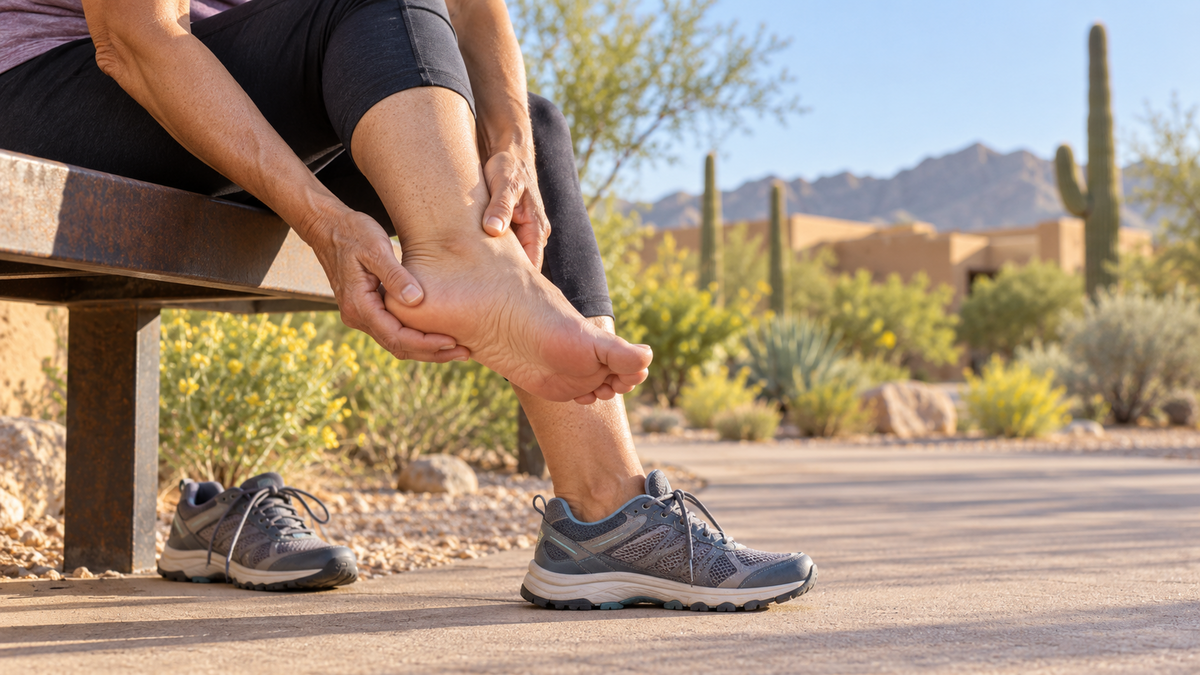
You get out of bed, take the first few steps, and the bottom of your heel lights up. You stretch it, roll it on a ball, buy different shoes, and maybe it settles down for a while. Then a longer walk, a shift on your feet, or a weekend hike brings it right back.
That cycle is frustrating, but it is also useful information. When plantar fasciitis keeps returning, the question is usually not, “What else can I rub on it?” The better question is, “What is this tissue being asked to tolerate, and why is its capacity not catching up?”
The term plantar fasciitis suggests inflammation. In an irritated early case, inflammation may be part of the picture. In a stubborn or recurrent case, however, the tissue often behaves more like a load-related fasciopathy: the plantar fascia is sensitive, its collagen has not fully adapted to demand, and the foot keeps cycling between too much stress and too little useful loading.
That distinction matters because pain relief and tissue recovery are not the same job. A treatment can calm the heel without fixing the reason it keeps flaring.
Key Takeaways
- Persistent heel pain should be reassessed. Not every painful heel is plantar fasciitis.
- Stretching may help, but stretching alone does not rebuild the foot and calf’s capacity for standing, walking, running, or hiking.
- Complete rest followed by a rapid return to normal activity often creates a boom-and-bust cycle.
- Shoes, taping, orthotics, acupuncture, and dry needling can reduce symptoms or support activity, but they work best inside a broader plan.
- Morning pain is a useful gauge of tissue irritability. It is not the only measure of recovery.
What the Plantar Fascia Actually Does
The plantar fascia is a thick band of connective tissue that runs from the heel toward the toes. It helps support the arch and transfers force as the foot accepts body weight and then becomes a firm lever for push-off. Each step asks it to store and release energy while coordinating with the calf, Achilles tendon, small foot muscles, and big toe.
That means the plantar fascia is not just a passive strap under the foot. Its workload changes with walking speed, hills, hard surfaces, time spent standing, calf strength, ankle mobility, footwear, body weight, and how quickly activity increases.
Clinical insight: The painful spot is often near the inside-front edge of the heel bone, but the problem is rarely limited to that one square inch. I also want to know how the ankle moves, how the calf manages load, how the big toe extends, what shoes you wear, and what changed before the pain started.
Seven Reasons Plantar Fasciitis May Not Be Improving
1. The Diagnosis May Be Incomplete
Classic plantar fasciitis usually causes pain near the inner-bottom heel that is worst with the first steps after rest. It may loosen as you move and return after longer activity. But several other problems can mimic it.
| Pain Pattern | Possible Clue |
|---|---|
| Inner-bottom heel; first steps after rest | Plantar fascia irritation |
| Deep bruise-like pain in the center of the heel | Heel fat-pad irritation |
| Burning, tingling, numbness, or electric pain | Nerve irritation or entrapment |
| Pain after a rapid increase in impact; pain with heel squeeze | Calcaneal stress injury |
| Pain at the back of the heel | Achilles insertion or bursa |
| Both heels with prolonged stiffness or other joint symptoms | Inflammatory or systemic condition |
If a reasonable plantar-fascia plan has not changed the pattern, repeating the same plan harder is not always the answer. Rechecking the diagnosis is.
2. The Load Never Really Changed
People often think they rested because they stopped running. But the heel may still be absorbing eight hours of standing, hard-floor walking, repeated ladders, pickleball, barefoot time at home, or a weekend hike. The plantar fascia responds to total weekly load, not just formal exercise.
In Tucson, this can show up when sandal season becomes most of the year or when cooler weather suddenly adds longer walks and hikes. Neither sandals nor hiking are automatically bad. The issue is whether the tissue was prepared for that amount of demand.
3. You Are Stuck in a Rest-and-Flare Cycle
Complete rest may reduce pain temporarily, but it also reduces the load the tissue is prepared to handle. Then the first “normal” day becomes a large spike. The heel flares, you rest again, and capacity never catches up.
Clinical insight: A useful plan usually keeps some tolerable activity in place while adjusting the dose. The goal is not zero sensation at every step. The goal is a level of activity the heel can recover from by the next morning.
4. Stretching Is Doing All the Work
Plantar-fascia-specific stretching and calf stretching can help. They are common parts of guideline-based care. But a stretch changes motion and short-term sensitivity more readily than it changes strength or load tolerance.
If every treatment session and home program ends with more stretching, ask where the progressive loading is. Depending on the person, that may include calf raises, bent-knee calf work, controlled toe loading, foot-intrinsic exercises, and a gradual return to the activities that matter.
5. The Calf, Ankle, and Foot Are Not Sharing Load Well
The plantar fascia works as part of a system. Limited ankle dorsiflexion can shift how the foot accepts load. A weak or easily fatigued calf may reduce control during stance and push-off. Poor big-toe extension can change the windlass mechanism that helps stiffen the arch.
None of these findings proves a single cause, but they can explain why local heel treatment is not holding.
6. A Helpful Tool Has Become the Whole Plan
Supportive shoes, taping, heel cups, orthotics, and night splints can all be useful in the right situation. They can lower symptoms enough to keep you moving or sleeping. What they usually do not do by themselves is rebuild the foot’s capacity.
The same is true for hands-on care. Acupuncture, dry needling, soft-tissue work, or another local treatment may reduce pain and muscle guarding. That can be valuable. But if the heel is still exposed to the same load spike with no progression plan, relief may be temporary.
7. Recovery Factors Are Being Missed
Recovery can be slower when sleep is poor, overall activity changes sharply, or health conditions affect tissue healing and nerve function. Diabetes, inflammatory arthritis, medication changes, and significant weight changes do not automatically cause plantar fasciitis, but they may affect the plan or the need for further evaluation.
What the Best Evidence Supports
Current clinical guidelines support a combined approach rather than a single magic treatment. Education and load management, plantar-fascia and calf stretching, progressive resistance exercise, taping, and selected manual therapy can all play a role.
Orthoses may help some people, particularly as part of a broader program, but they are not recommended as an isolated cure. Night splints are most relevant when first-step morning pain remains prominent.
A 2021 best-practice guide in the British Journal of Sports Medicine emphasized education, stretching, and taping as core care, with additional treatment stepped in according to response. The 2023 Journal of Orthopaedic & Sports Physica
l Therapy guideline similarly supports matching treatment to the person rather than relying on one passive intervention.
Evidence for acupuncture and dry needling is encouraging but less settled. Reviews and newer trials suggest they may improve pain and function for some people, particularly when symptoms are chronic, but study methods vary and they should be presented as adjuncts rather than guaranteed fixes.
The important distinction: If a treatment gives you a window of lower pain, that is useful. The next step is to use that window to restore walking tolerance, calf capacity, and confidence. Symptom change is part of the plan, not the finish line.
What a More Complete Plan Looks Like
A good plan is specific enough to change when the heel changes. It may include:
- Confirming that the pain pattern still fits plantar fasciitis.
- Identifying the weekly load that repeatedly exceeds capacity.
- Using footwear, taping, or an orthotic to make activity tolerable while the tissue adapts.
- Keeping appropriate movement in place instead of defaulting to complete rest.
- Progressing calf, foot, and toe loading in stages.
- Using acupuncture, dry needling, or manual treatment when pain or guarding is limiting progress.
- Reassessing if the pattern stalls, changes, or develops neurologic or systemic features.
A Practical Two-Week Reset
If your symptoms are mild and the pattern is otherwise typical, start by making the problem measurable.
- Track first-step pain. Each morning, rate the discomfort on a simple 0–10 scale and note how many steps it takes to ease.
- List your actual weekly load. Include work hours standing, walks, hikes, classes, sports, and barefoot time.
- Reduce your biggest aggravating activity. Shorten the walk, split the shift with sitting breaks, or choose a flatter route rather than eliminating all movement.
- Keep a tolerable strengthening routine. Calf and foot exercises two or three times per week may be a starting point. Mild discomfort may be acceptable if it settles and the next morning is not clearly worse.
- Use appropriate support. A comfortable shoe, taping strategy, or heel support can make necessary activity easier.
- Reassess the trend. If morning pain remains unchanged or continues worsening, schedule an assessment rather than adding more random exercises.
When Persistent Heel Pain Needs Further Evaluation
Get evaluated sooner if you have a recent injury, cannot bear weight, have marked swelling or bruising, develop redness or warmth with fever, notice a wound or skin breakdown, or have progressive numbness or weakness.
Unexplained pain at rest or at night, pain on both sides with prolonged morning stiffness, or symptoms that keep worsening despite appropriate care also deserve a closer look.
People with diabetes, impaired circulation, neuropathy, inflammatory disease, or immune suppression should use a lower threshold for professional assessment.
Common Misconceptions About Plantar Fasciitis
“A heel spur is causing all of this.”
Heel spurs are common and may be present without pain. The clinical pattern matters more than the X-ray finding alone.
“I need to stretch harder.”
Aggressive stretching can irritate a reactive heel. The right dose and the addition of progressive strength usually matter more than intensity.
“If it hurts, I should stop using the foot.”
Some load is necessary for tissue adaptation. The task is to find a dose the heel can recover from.
“One injection or one treatment should fix it.”
A procedure may reduce symptoms, but persistent cases still need an accurate diagnosis and a plan for the loads that created or maintain the problem.
Frequently Asked Questions
How long can plantar fasciitis last?
Symptoms can persist for months, especially when activity repeatedly exceeds the tissue’s capacity or the diagnosis is incomplete. Duration varies, so progress is better judged by the morning trend, walking tolerance, and response to progressive loading than by a fixed deadline.
Why does plantar fasciitis hurt most in the morning?
The plantar fascia and nearby tissues become relatively still overnight. The first steps suddenly reload a sensitive area, which can produce sharp heel pain. The same pattern may occur after sitting for a long time.
Should I keep walking with plantar fasciitis?
Usually, some walking can remain in the plan if the dose is adjusted. A useful guide is whether symptoms settle after activity and whether first-step pain is stable the next morning. Severe pain, limping, or a worsening trend calls for reassessment.
Do orthotics cure plantar fasciitis?
Orthotics may reduce symptoms or redistribute pressure for some people, but they are usually most helpful as one part of a program that also addresses load, strength, mobility, and activity progression.
Can acupuncture help plantar fasciitis?
Acupuncture may reduce pain and muscle guarding for some people. Research is promising but variable, so it is best presented as an adjunct to an accurate diagnosis, load management, and progressive rehabilitation rather than a guaranteed stand-alone cure.
When should heel pain be imaged?
Imaging is not always necessary for a typical presentation. It becomes more useful when there was trauma, a stress injury is suspected, symptoms are atypical, neurologic signs are present, or a reasonable treatment plan has not changed the pattern.
Common Roots Clinical Pearl
Use morning pain as a report card, not a verdict.
If today’s activity causes a clear and sustained increase in first-step pain tomorrow, the dose was probably too high. If the morning trend is stable or gradually improving, the heel may be adapting even if it is not yet pain-free.
The Bottom Line
When plantar fasciitis will not go away, the answer is usually not one more passive treatment. It is a better diagnosis, a clearer picture of total load, and a plan that reduces irritability while rebuilding capacity.
At Common Roots Acupuncture in Tucson, we look at the painful heel, but we also look at the calf, ankle, foot mechanics, activity pattern, and signs that the problem may be something else.
Acupuncture or dry needling may be part of care when they fit the examination. The longer-term goal is to help the foot tolerate the walking, work, and recreation you actually want to do.
Learn more about plantar fasciitis and foot pain treatment in Tucson or contact Common Roots Acupuncture to schedule an evaluation.
